


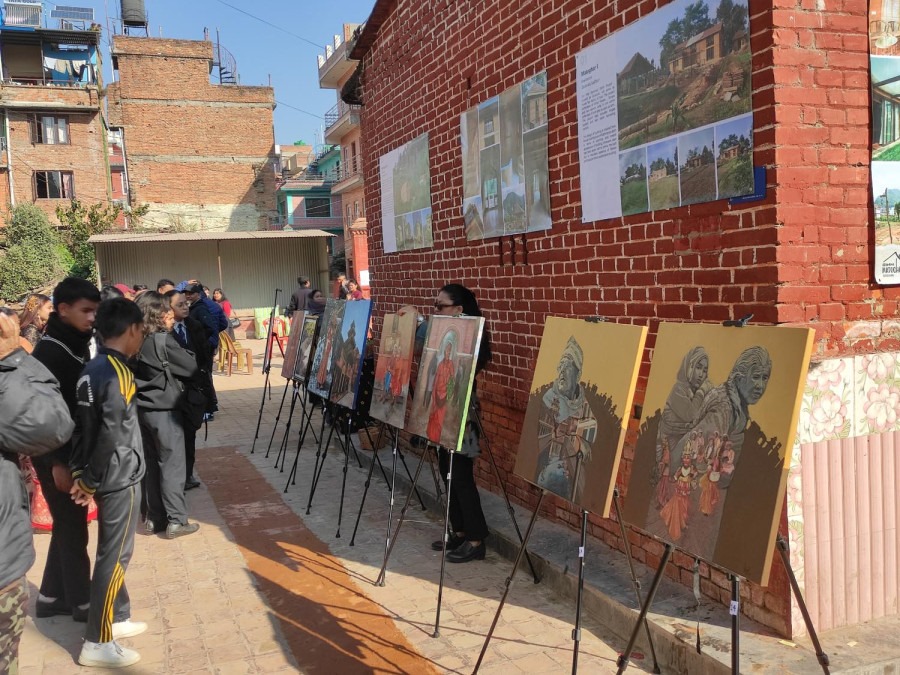
There’s more to Newa culture than just Patan and Bhaktapur. To showcase the unique heritage of smaller places, a group organized the Harisiddhi Art Mela. This event featured art, music, workshops for schools, and stalls selling local goods, including Newa food. It aimed to shed light on the cultural treasures of lesser-known places in the Kathmandu Valley.
Newa culture is about living sustainably and in well-planned settlements. They focus on communal living and preventing land divisions. The event’s organizers believe that understanding this culture is vital, especially when community connections are weakening. They think art can help revive these important values.
The founder, Basanta Shrestha, cares deeply about the environment and culture. He built a sustainable home called ‘Mato Ghar.’ He wants to celebrate and preserve unique cultures like those in Tokha, Bungamati, Harisiddhi-Jala, and others. He also wants to support young artists.
At the event, local artists displayed paintings inspired by daily life in Harisiddhi. One painting surprised a resident by featuring her husband. Moments like this touched everyone’s hearts, especially the artists.
The event also helped new artists get noticed and taught others how to create crafts from natural materials and kitchen waste.
Students like Palistha, who volunteered, felt grateful for this chance to see great artworks up close. They hope to have their art showcased one day too.
Local resident Sani Krishna reflects on the changes after the earthquake, how traditional mud houses provided comfortable temperatures. Losing these houses affected community bonds. Events like this give hope for cultural revival.
Erina Tamrakar, an artist, highlights the importance of Nepal’s first mask dance, Harisiddhi Nach. She believes in collaboration between locals and artists to support each other and promote culture. Everyone involved wants to keep celebrating heritage through art and culture, potentially expanding to places like Lubhu.


