


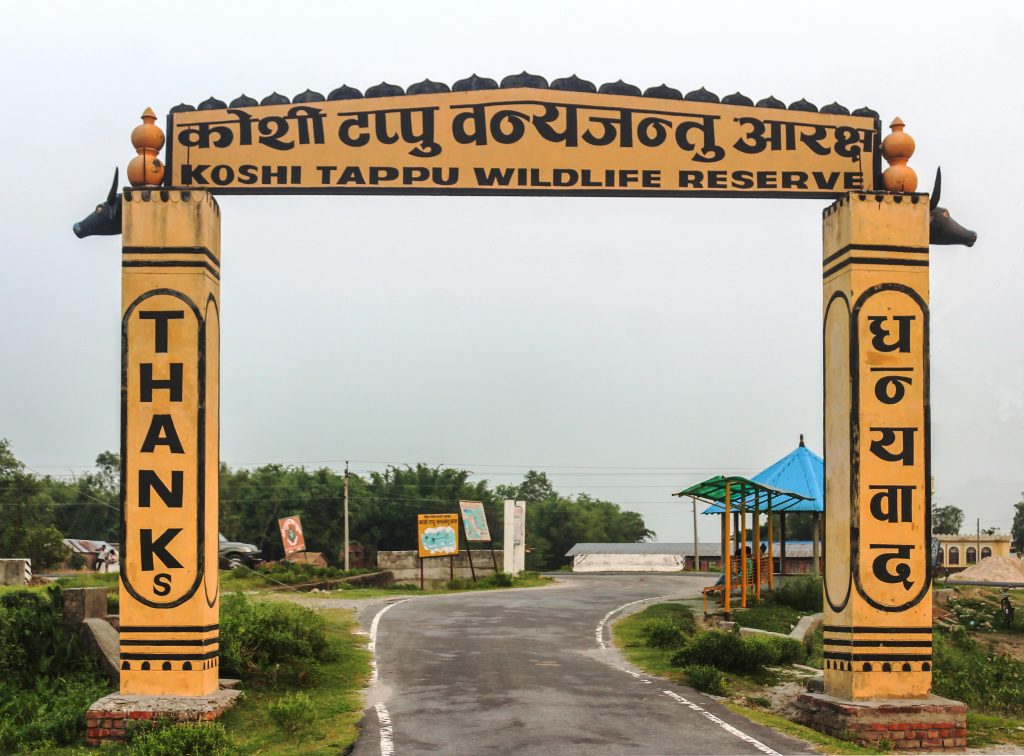
Koshi Tappu Wildlife Reserve is located in the southeast region of Terai and it is the smallest wildlife reserve in Nepal, spanning 176 square kilometers.
The vegetation is mainly composed of tall grasslands. Local villagers are permitted to collect thatch grass once a year. These are used for roof thatching and building house walls. There are also small patches of Khair-sissoo scrub forest and deciduous mixed riverine forest.The reserve has important habitat for a variety of wildlife. The last surviving population of Wild buffalo is found here. The estimated population of wild buffalo is around 159 individuals and is dwindling. They are distinguished from domestic buffalo by their much bigger horns. The reserve is also home to around 20 other animal species such as Hog deer ,Wild boar , Spotted deer, Blue bull, and Rock Python.
Around 441 species of birds-many seen nowhere else in Nepal (14 endemic species)- have been recorded, including 20 duck species , 2 Ibis species, white tailed stonechat , Striated marsh warbler, 30 shore birds, 114 water birds, and the endangered swamp partridge and Bengal florican. The Koshi Barrage is an extremely important resting place for many migratory birds, containing 87 winter and trans-Himalayan migratory species. The Koshi River is home to 80 species of fish. The endangered Gharial crocodile and Gangetic dolphin have been recorded in the river as well. During winter, many of the migratory birds can be seen on the Koshi Barrage and on the river channel. Migration usually peaks around mid March. Much wildlife visits these areas during dusk and dawn. The clear skies allow for beautiful sights of several Himalayan peaks including Makalu (8463m), the world’s fifth highest peak.Visitors can arrange elephant ride from Reserve Headquarters
Best time to visit: November to February.


